AiR – casavela (SP, Brasil, 2026)
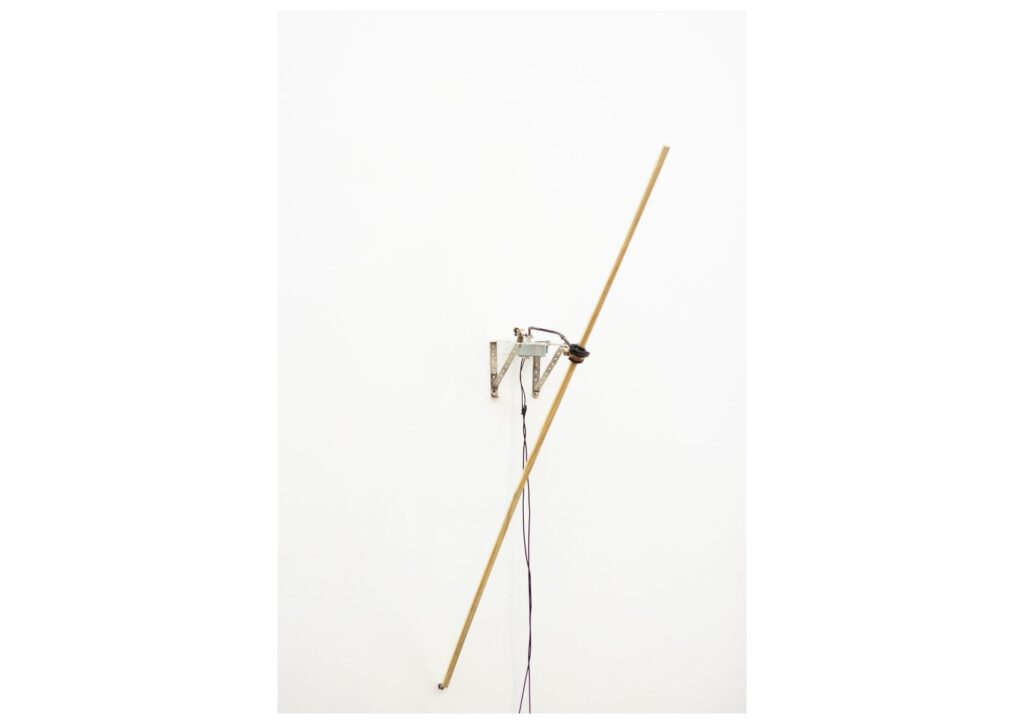
Residência Artística – casavela 222 Percorro o espaço da casavela e vou reconhecendo, obra a obra, uma qualidade que me parece central no trabalho que Victor Gonçalves desenvolveu aqui: a tensão. Não falo de uma tensão violenta, abstrata. Falo daquela que a gente conhece do corpo, dos músculos com os ossos que sem ela a gente nem fica em pé. É a mesma tensão que coloca a ponta do lápis contra o papel e faz com que esses dois materiais se encontrem para que uma linha aconteça. O desenho, na sua raiz, é isso: tensão e movimento. É o que vou reconhecendo em cada peça. Diante das transparências, que já evocava em mim algo mecânico, Victor me conta que são difusores de luz, nisso percebo que elas ainda guardam esse gesto inaugural do desenho: linhas que quase somem num espaço difuso. Superfícies que não se entregam por completo, que pedem um tempo de olhar. Mas há algo mais. Há as maquininhas. Chamo assim não por tamanho, mas por uma qualidade de presença: são delicadas, quase invisíveis, como insetos. Não querem ocupar o centro, não se impõem. Estão ali para servir aos outros elementos, para colocá-los em movimento, para que o espaço ganhe uma respiração diferente. Os fios que acionam essas maquininhas desenham no ar. Tudo vira linha. Tudo é composição. E as sombras que os objetos projetam não são resto, não são acaso. Integram a obra. Gosto de pensar nelas como “estranhas camadas do desenho”, esse lugar impreciso entre o que é matéria e o que é vestígio, entre o que a gente vê e o que quase vê. Há também uma peça que é um pouco nossa, de nós dois. Um busto de Vênus que Victor apropriou-se e colocou virado para a parede com uma lanterna. O objeto quase se anula. Renuncia à sua história, à sua imagem de deusa, para que outra coisa apareça. E o que aparece é uma mancha vermelha no encontro das paredes, uma figura que parece um coração invertido. O objeto some para que o desenho de luz ganhe corpo. A peça, do jeito que Victor a posicionou, ancora tudo. É ali que as questões que atravessam esses três semanas de trabalho: a tensão, o movimento, a transparência, o desenho como presença e como ausência, encontram, me parece, o seu lugar. Nino Cais São Paulo, fevereiro de 2026 Fotos: Patricia Black e Victor Gonçalves
AiR – MzMv
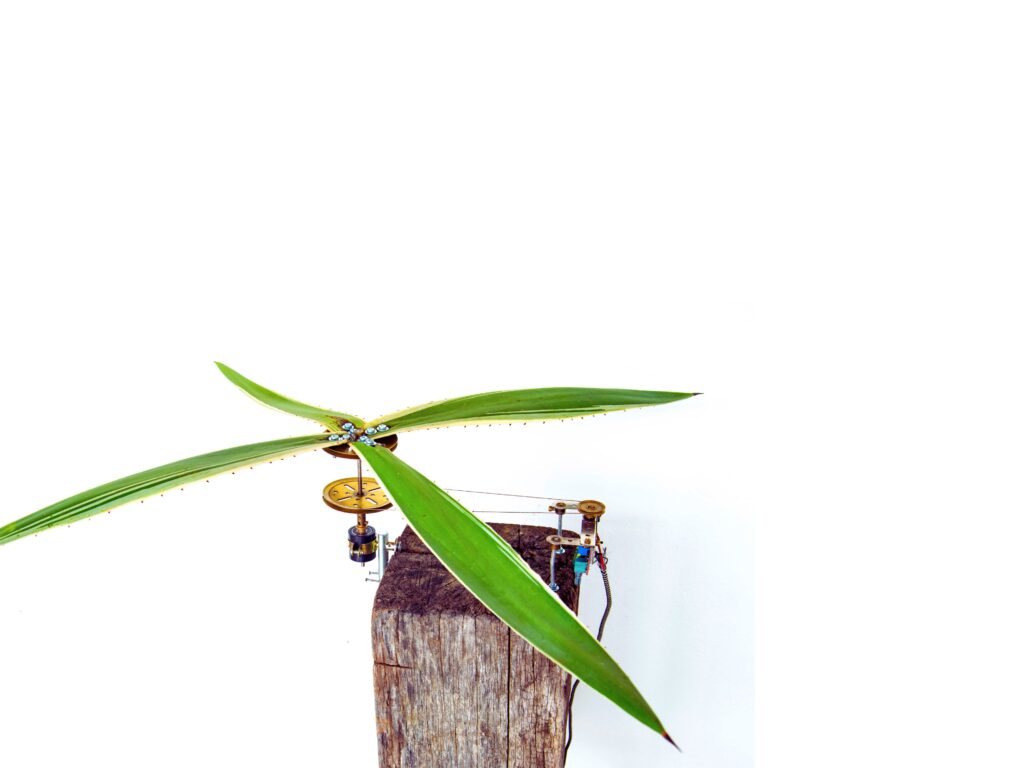
Results of the artistic residency carried out at the Morro da Varzea Monastery in Espirito Santo, Brazil.
Diagnósticos errados formularam ideias certas, 2023
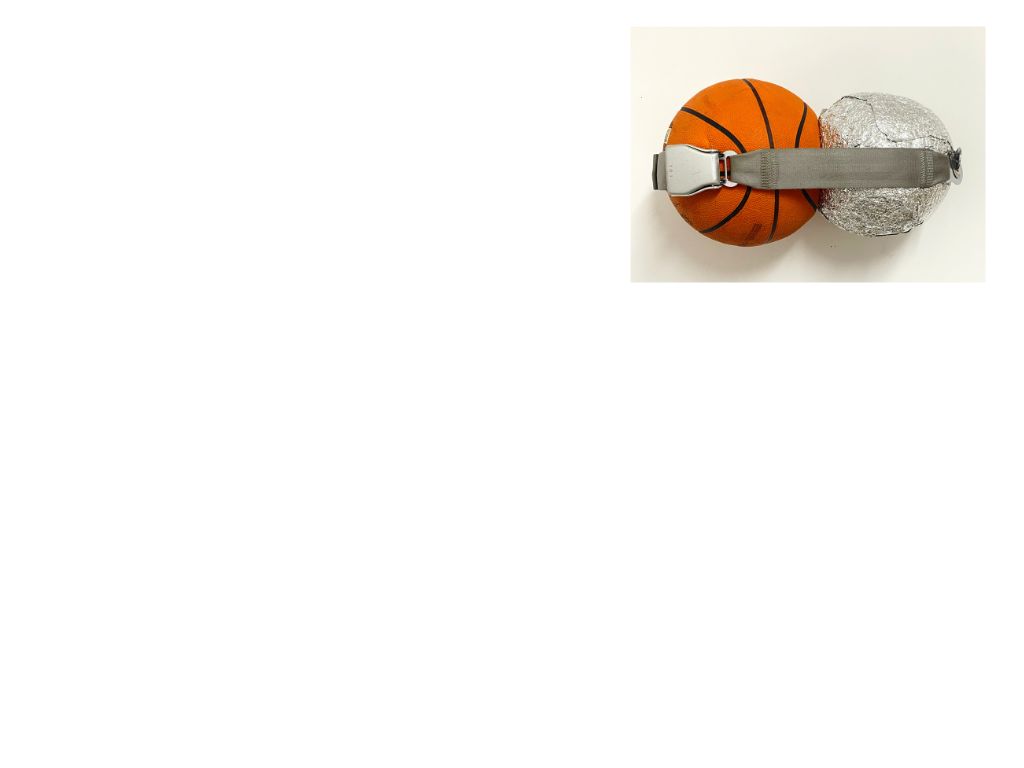
Wrong diagnoses formed the right ideas – 2023 Bola de volei, bola de alumínio e sinto de segurança roubado de Airbus A320 TP0860 60x30x30 cm Featured in the Hammer Time exhibition at the Zarathan Gallery. Lisbon, 2025.
Situção-salobra, 2025
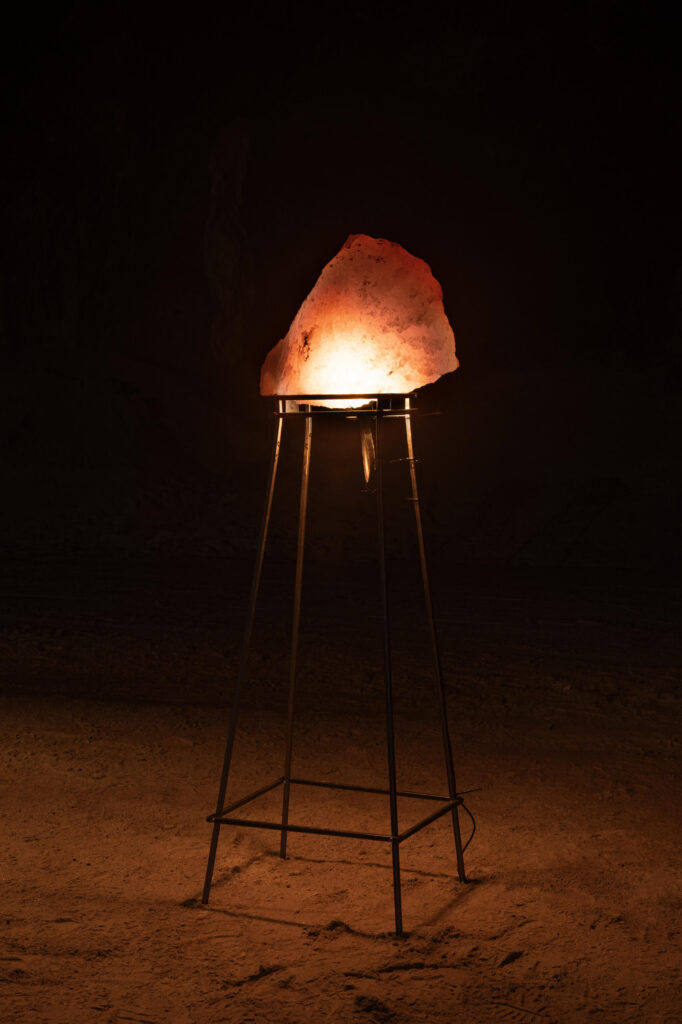
Sound installation – Iron, Salt, and MP3 player – Foto: Hugo Botelho Rodrigues Sound installation – Iron, Salt, and MP3 player – Foto: Hugo Botelho Rodrigues Sound installation – Iron, Salt, and MP3 player – Foto: Hugo Botelho Rodrigues Sound installation – Iron, Salt, and MP3 player – Foto: Hugo Botelho Rodrigues Salobra Situation Sound installation – Iron, Salt, and MP3 player A – 54’50 – Audios from: Documentary “Braskem also passed through here: the tragedy of the flexais” by Carlos Pronzato; “Our history was destroyed” Brasil de Fato; Braskem Case: residents tell of the horror that Maceió is experiencing. B – 125’28 – Reading of the final report of the Braskem CPI – TV Senado – Brazil C – 10’ Walk through neighborhoods affected by subsidence in Maceió and walk through the city of Loulé. Editing and Assembly: Victor Gonçalves and Sandor Marazza Production structures: Associação Atelier B12 On April 17th, the artists Maura Grimaldi, Natália Loyola and Victor Gonçalves join the Alfaia Association and the Verão Azul Festival, with the support of the Portuguese Republic – Culture / Directorate-General for the Arts, for the inauguration of the exhibition SALARIS – Fictions from Salt. The exhibition is an artistic intervention in a Rock Salt mine in Loulé with about 45km of extension. Each artist will occupy a distinct chamber within this underground complex, creating a path that invites visitors on a journey through different artistic explorations of salt, geology, and human relationships with the natural and technological environment. “Descending 230 meters into the earth is more than a physical displacement, it’s a shift in scale. The mine is, at the same time, a human gesture and a force that surpasses us. It swallows us, repositions us, helps us remember that we are part of the landscape, not something separate from it,” describes Natália Loyola. Natália, exploring the field of sound ecologies, develops installations that transform the tactile into sonic experiences. Her work investigates the tenuous relationship between the artificial and the natural, between language, spatiality, and geology, by integrating technological elements to create immersive sound environments that invite reflection on the narratives of the Capitalocene. For Victor Gonçalves, “this project is, for me, a kind of journey to the center of the earth, in a sense that Jules Verne might not have imagined: not a search for fossils or volcanoes, but a descent into the invisible layers of geological chronology. The salt mine, with its halite walls, becomes a place of total sensory experience. Occupying an active mine is like entering a space where the plasticity of time materializes in strata, and where human action and geology meet in an aggressive and poetic way.” Victor presents two installations that explore the relationship between time and matter. “Evento Sentinela” (Sentinel Event) is composed of more than 1,300 paper boats, made with the report of the CPI (Parliamentary Inquiry Commission) of Braskem in the Brazilian Senate about the environmental crime in the rock salt mine of Maceió. The boats, arranged on a salt platform with 130 m², transform the official document into a visual experience. “Situação-Salobra” (Brackish Situation) proposes a sound and tactile immersion, where the public is invited to stand before blocks of salt. Both works investigate the fragility between medium and message and the tension between the artificial and the natural. Maura Grimaldi, in turn, will transform their chamber into an immersive space of images, seeking relationships between the experience of cinema and the underground world of the Mine’s galleries. They also intend to make use of what they call “slow practices” by using analog formats, such as 16mm, and chemical processes in her studio. “In general, we don’t usually realize how salt is so present in the things we consume and live with, nor do we have the dimension of the colossal structure that is created for its extraction. It is when the most everyday things, which often seem irrelevant and small, gain another value. Being able to experience, up close, the environment of the mine is as sublime as it is astonishing. We become aware of the magnitude of work and equipment capable of, at the same time, providing resources and irreversibly intervening in the landscape,” says Maura. Each installation takes advantage of the unique characteristics of the rock salt mine, from its natural darkness to its crystalline walls, to create immersive and reflective experiences. This project not only highlights the individual practices of the artists, but also creates a dialogue between their approaches, offering visitors a multifaceted perspective on the complex relationships between humans, technology, and the natural environment in the contemporary context.
Evento Sentinela. 2025
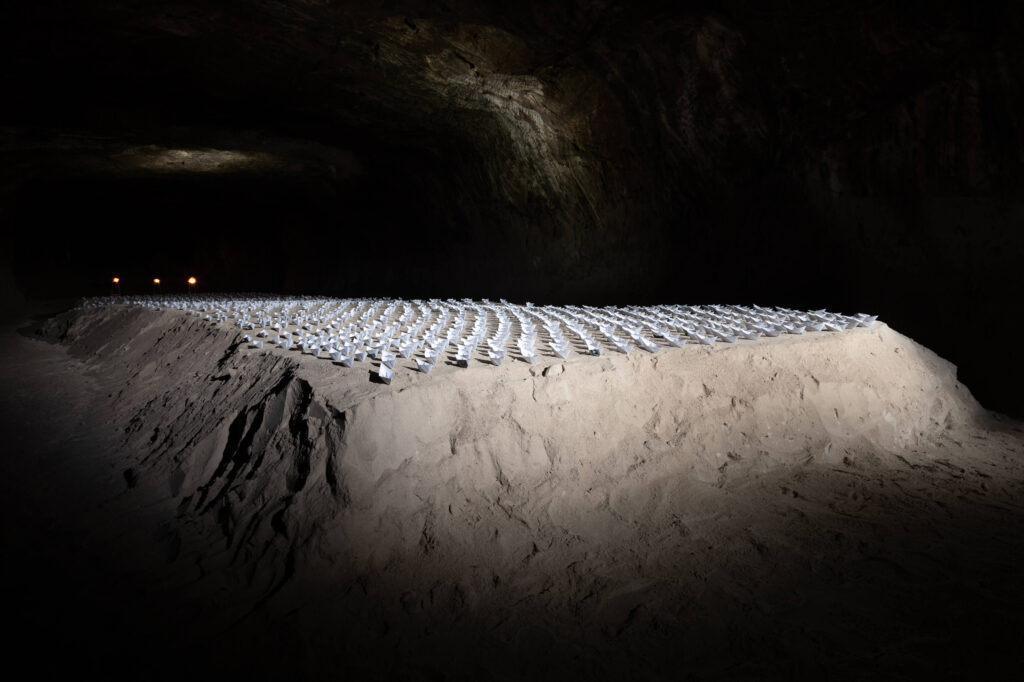
Evento Sentinela, 2025 – Exposição Salaris – Loulé, PT – foto: Hugo Botelho Rodrigues Evento Sentinela, 2025 – Exposição Salaris – Loulé, PT – foto: Hugo Botelho Rodrigues Evento Sentinela, 2025 – Exposição Salaris – Loulé, PT – foto: Hugo Botelho Rodrigues Evento Sentinela, 2025 – Exposição Salaris – Loulé, PT – foto: Hugo Botelho Rodrigues Evento Sentinela, 2025 – Exposição Salaris – Loulé, PT – foto: Hugo Botelho Rodrigues Installation with Final Report of the Brasken CPI –1308 paper boats on a rock salt platform.37 x 5 x 1 m On April 17th, the artists Maura Grimaldi, Natália Loyola and Victor Gonçalves join the Alfaia Association and the Verão Azul Festival, with the support of the Portuguese Republic – Culture / Directorate-General for the Arts, for the inauguration of the exhibition SALARIS – Fictions from Salt. The exhibition is an artistic intervention in a Rock Salt mine in Loulé with about 45km of extension. Each artist will occupy a distinct chamber within this underground complex, creating a path that invites visitors on a journey through different artistic explorations of salt, geology, and human relationships with the natural and technological environment. “Descending 230 meters into the earth is more than a physical displacement, it’s a shift in scale. The mine is, at the same time, a human gesture and a force that surpasses us. It swallows us, repositions us, helps us remember that we are part of the landscape, not something separate from it,” describes Natália Loyola. Natália, exploring the field of sound ecologies, develops installations that transform the tactile into sonic experiences. Her work investigates the tenuous relationship between the artificial and the natural, between language, spatiality, and geology, by integrating technological elements to create immersive sound environments that invite reflection on the narratives of the Capitalocene. For Victor Gonçalves, “this project is, for me, a kind of journey to the center of the earth, in a sense that Jules Verne might not have imagined: not a search for fossils or volcanoes, but a descent into the invisible layers of geological chronology. The salt mine, with its halite walls, becomes a place of total sensory experience. Occupying an active mine is like entering a space where the plasticity of time materializes in strata, and where human action and geology meet in an aggressive and poetic way.” Victor presents two installations that explore the relationship between time and matter. “Evento Sentinela” (Sentinel Event) is composed of more than 1,300 paper boats, made with the report of the CPI (Parliamentary Inquiry Commission) of Braskem in the Brazilian Senate about the environmental crime in the rock salt mine of Maceió. The boats, arranged on a salt platform with 130 m², transform the official document into a visual experience. “Situação-Salobra” (Brackish Situation) proposes a sound and tactile immersion, where the public is invited to stand before blocks of salt. Both works investigate the fragility between medium and message and the tension between the artificial and the natural. Maura Grimaldi, in turn, will transform their chamber into an immersive space of images, seeking relationships between the experience of cinema and the underground world of the Mine’s galleries. They also intend to make use of what they call “slow practices” by using analog formats, such as 16mm, and chemical processes in her studio. “In general, we don’t usually realize how salt is so present in the things we consume and live with, nor do we have the dimension of the colossal structure that is created for its extraction. It is when the most everyday things, which often seem irrelevant and small, gain another value. Being able to experience, up close, the environment of the mine is as sublime as it is astonishing. We become aware of the magnitude of work and equipment capable of, at the same time, providing resources and irreversibly intervening in the landscape,” says Maura. Each installation takes advantage of the unique characteristics of the rock salt mine, from its natural darkness to its crystalline walls, to create immersive and reflective experiences. This project not only highlights the individual practices of the artists, but also creates a dialogue between their approaches, offering visitors a multifaceted perspective on the complex relationships between humans, technology, and the natural environment in the contemporary context.
Instrumentos de Aferição dos desencontros – 2023
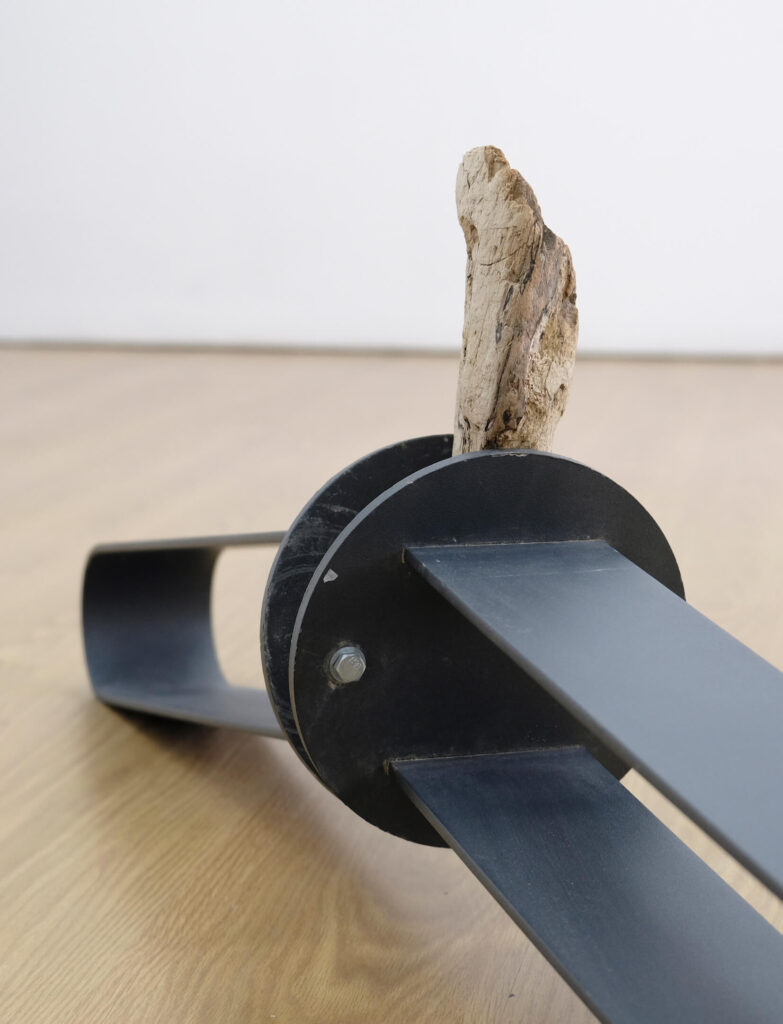
Instrumento de aferição dos desencontros 2023 Pilaretes, madeira e parafusos. 144 x 43 x 21 Instrumento de aferição dos desencontros 2023 Pilaretes, madeira e parafusos. 144 x 43 x 21 Instrumento de aferição dos desencontros 2023 Pilaretes, madeira e parafusos. 144 x 43 x 21 Instrumento de aferição dos desencontros 2023 Pilaretes, madeira e parafusos. 144 x 43 x 21 The series explores the theme of machine-based human problem solving, such as instruments made to measure immeasurable. Was present at the exhibition “Hidden Cities” curated by Duda Afonso e JP – B12 Gallery, 2024. Instrumento de Aferição dos Desencontros is a performative installation that engaged in a conversation with Nico Espinoza sound exhibited at As Cidades Ocultas collective exhibition during its finissage.
Overlapsos
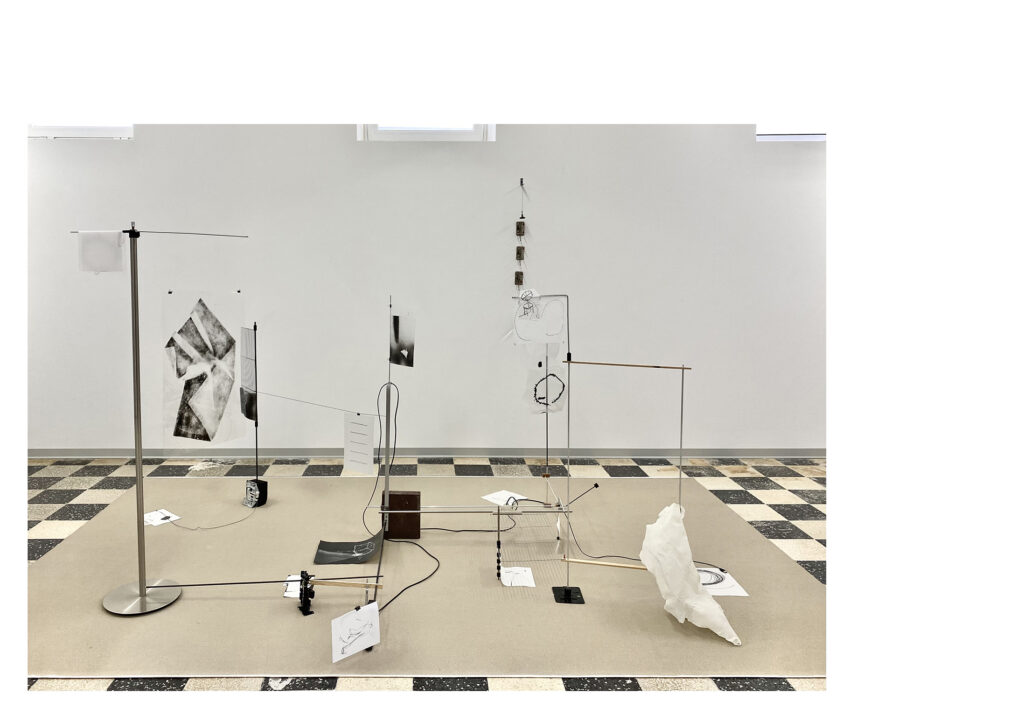
This work is the result of the Elliptical Trip project in which, through daily drawing, I turn my attention to the daily life of humanity’s elliptical path through outer space. The installation-drawing arises from an irregular centripetal gesture when building a space of relationships. In designing the installation, I seek to displace the objects, including the drawings themselves, from their original functions and, consequently, I attribute aesthetic functions to each small object. Thus, I call attention to the excess of things that surround us. So, instead of praising precariousness and improvisation, I produce new tensions, I evoke the possibilities of non-trivial encounters. And in this poetics of changing the objects of their predestination, I ask: to what extent are we not becoming things uncritically easy to be (re)moved in a dehumanizing system? Aluminum rods, iron rod, chromed metal bar, lamp holder, paper clips, wood, steel cable, nylon wire and fabric, masking tape, liquid porcelain (biscuit), coated copper cable, usb cable, door lock, jet printer paper scroll frame, screw holder, screw, aluminum ruler plate, clamping press, ceramic oven block, non-slip rubber, pendant, graphite and gouache on tissue paper, graphite, ink and gouache on fabbrian paper, oil pastel and spray on watercolor paper, graphite on tracing paper, ink parchment paper, pencil and ink without squared paper, posca on dotted paper, spray on acetate, on linen canvas prepared for painting. 350 x 215 x 170 cm, 2022
In The End Everything Is A Carbon Chain
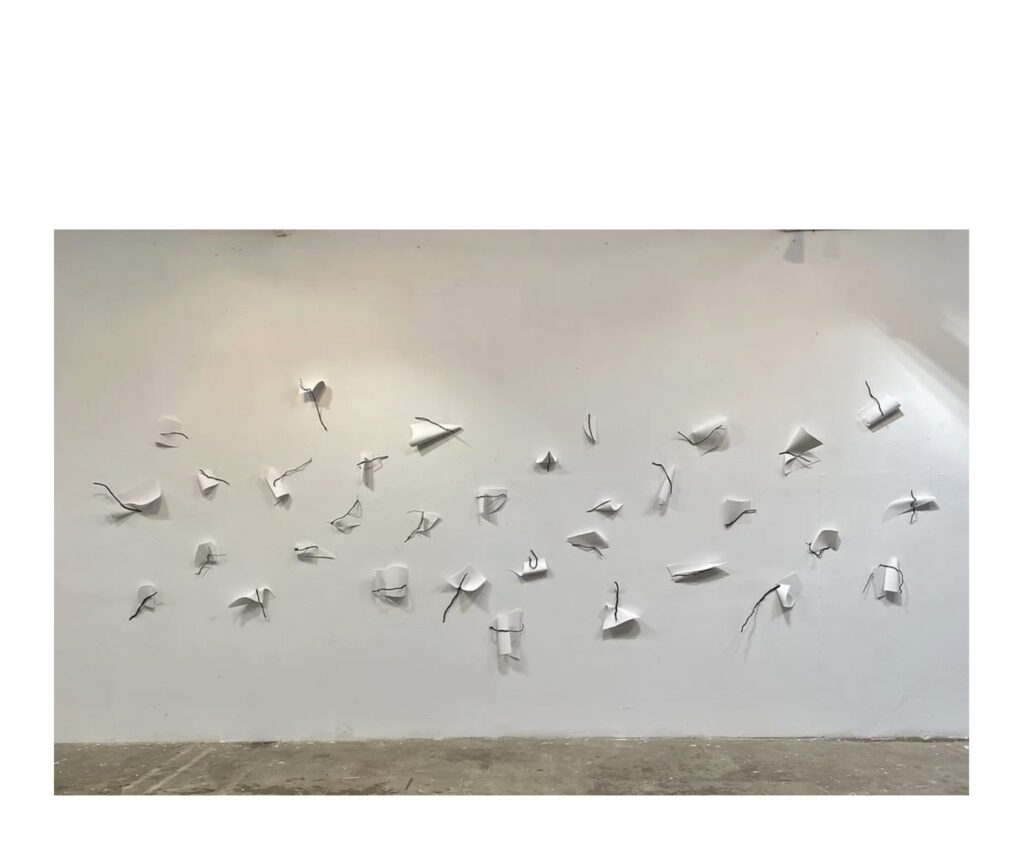
Exhibition – Galeria Espronceda – Barcelona – Tree roots covered in graphite and 200g Fabriano paper. Exhibition – Galeria Espronceda – Barcelona – Tree roots covered in graphite and 200g Fabriano paper. Exhibition – Galeria Espronceda – Barcelona – Tree roots covered in graphite and 200g Fabriano paper. Cerveira Biennal – Portugal – Tree roots covered in graphite and 200g Fabriano paper. Cerveira Biennal – Portugal – Tree roots covered in graphite and 200g Fabriano paper. Cerveira Biennal – Portugal – Tree roots covered in graphite and 200g Fabriano paper. Cerveira Biennal – Portugal – Tree roots covered in graphite and 200g Fabriano paper. sketches of ideas and concepts In the end everything is a carbon chain, Barcelona, 2021 and Cerveira Biennal, 2022. Roots of local trees covered in graphite and 200g Fabriano paper. 700 x 250 cm. One of the most elementary conceptions of what drawing is can be the gesture of tracing something like graphite on a surface. Here it is the paper that scratches the graphite and not the other way around. The installation that occupies several meters on a wall is composed of paper, graphite and roots. If we really think about it, ultimately everything is a carbon chain. So, what now?
Solo show – By a thread
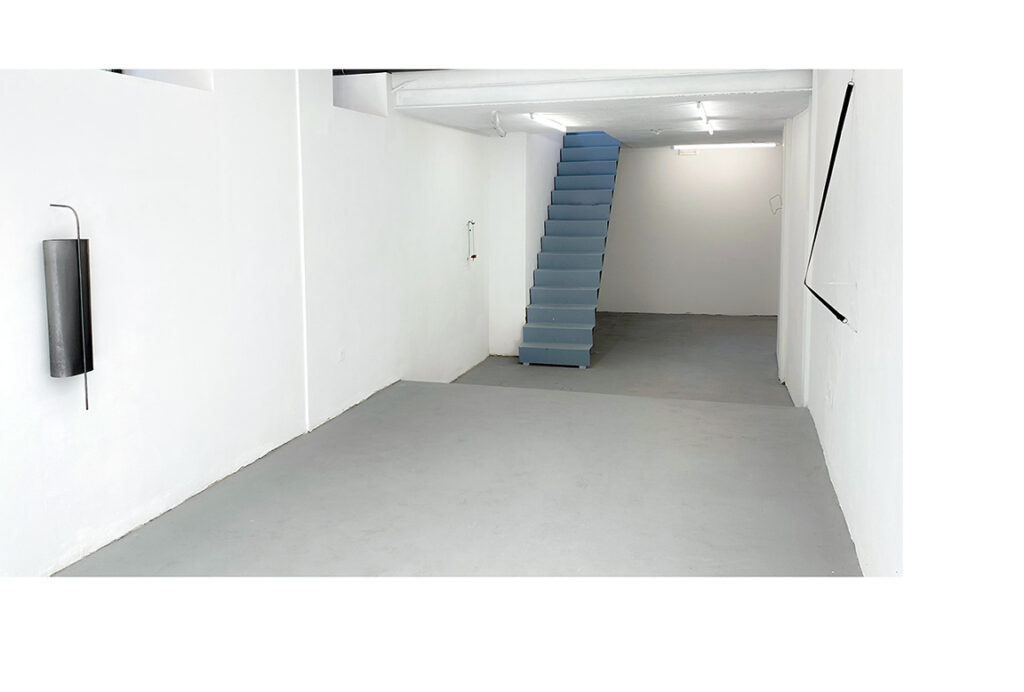
Instrumento de aferição das ideias (Instrument for the Measurement of Ideas), 2021 Glass, wood, power cable, threaded bar, magnets, nuts, ruler and aluminum. 46 x 32 x 7 cm Gaze Measurement Instrument, 2021 Steel bar and graphite on paper. 70 x 25 x 25 cm Gaze Measurement Instrument, 2021 Steel bar and graphite on paper. 70 x 25 x 25 cm 2021 Lente de vidro, ferro e madeira, 48 x 21 x 25 cm 2021 Lente de vidro, ferro e madeira, 48 x 21 x 25 cm Instrumento de aferição das ideias (Instrument for the Measurement of Ideas), 2021 Glass, wood, power cable, threaded bar, magnets, nuts, ruler and aluminum. 46 x 32 x 7 cm 2021_ampola, porca e barra rosqueada. 14×2 For at least 10 years, drawing has been an instrument of research and intervention in the world for Victor Gonçalves. With a degree in Geography from Universidade Estadual Paulista (São Paulo, 2012), he chose observation drawing over photography as part of the methodology for a research on the appropriation of public space in Presidente Prudente, a city in the countryside of São Paulo. His concern was to question the absorption of a certain observed reality and use it as an interpretive resource. The study won the Young Scientist Award (CNPQ/FAPESP) and pointed the way to art for the then geographer, who arrived in Lisbon to improve his artistic training at Ar.Co, in 2017. What you, visitors to this first individual exhibition by Victor Gonçalves, will find here, at Espaço NowHere, is a mature body of works by a young artist who continues to challenge the relationship between drawing and space, but now no longer under the key of representing the space, but to revolve our perception of the environment, surroundings, architecture, and other topics. We are faced with a myriad of drawing possibilities in the expanded field, in which not only the traditional notions of this medium are challenged, but also gravity and balance. Sometimes the drawing is the result of a line that jumps off the wall due to an almost imperceptible glass plunger or by the action of the sun’s trajectory, amplified by a magnifying glass positioned in the main window of the space, which traces a strong line in the wood. In others, drawing is an artifice that camouflages the paper as sheet metal by the vigorous application of graffiti or reveals new traces of the houses and streets that surround the gallery through a floating lens. In almost all these cases, things seem at first sight, but they are not, which forces us to give in to the experience of reconsidering reality. The devices created by Victor Gonçalves are on the edge, whether because of the precarious stability of materials and elements or even the bankruptcy of vocabulary that is no longer able to conceptualize what we see. Drawing for this artist is risk in the sense of scratched and risky. There is beauty, vulnerability, ingenuity, and cunning in these operations, such as the life that is also always hanging by a thread.
Por um fio
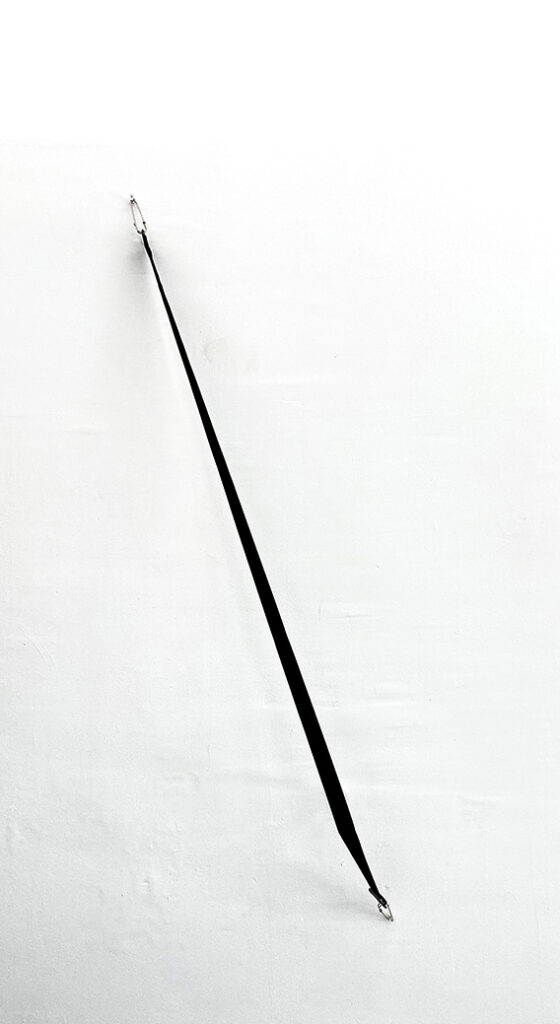
Por um fio – By a thread This work gave name to my first solo exhibition held in 2021 at the NowHere gallery. The exhibition, curated by Cristiana Tejo, featured parts of three projects that I am still developing today: Instruments of measuring, Avulsos, and Drawings.