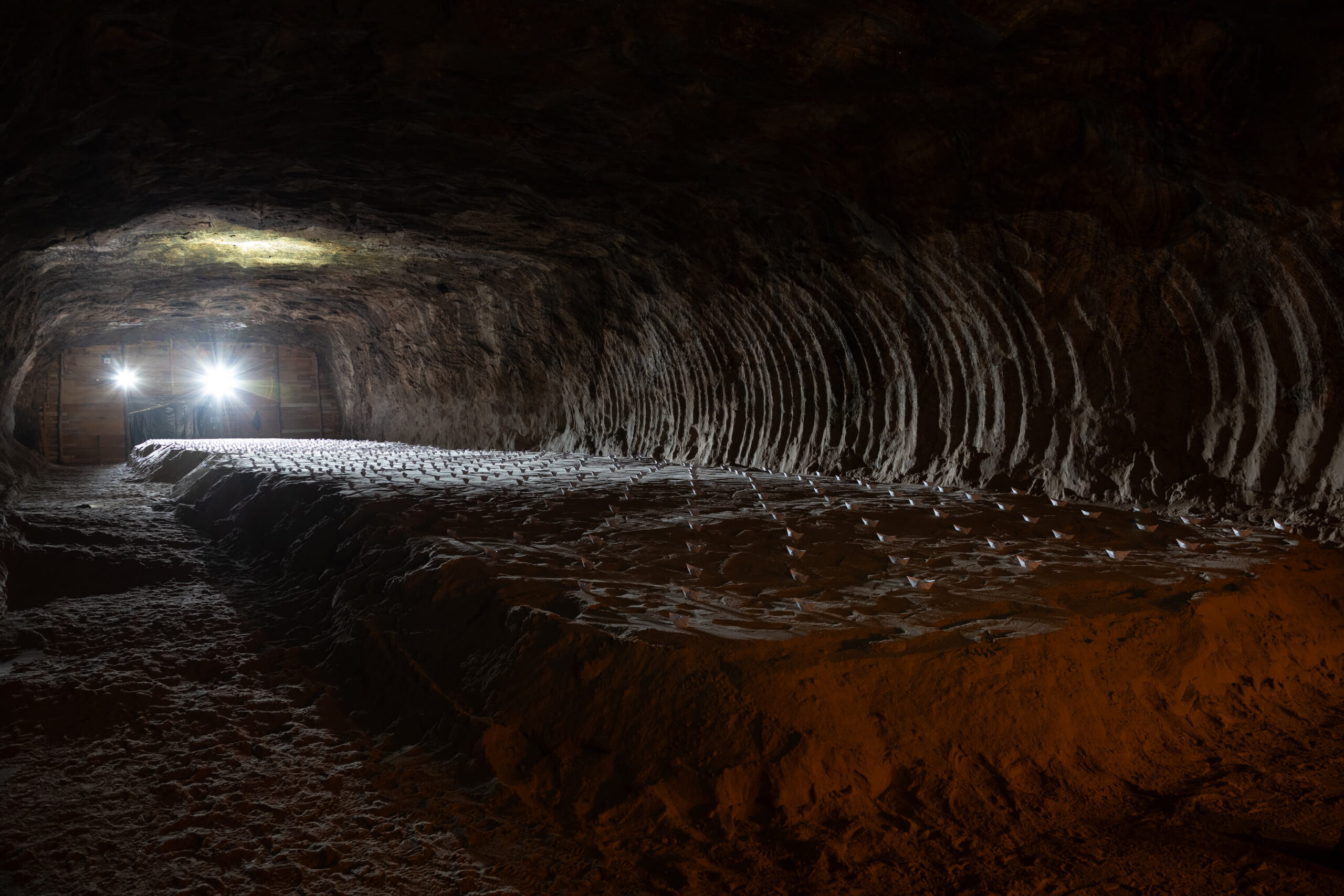
Installation with Final Report of the Brasken CPI –
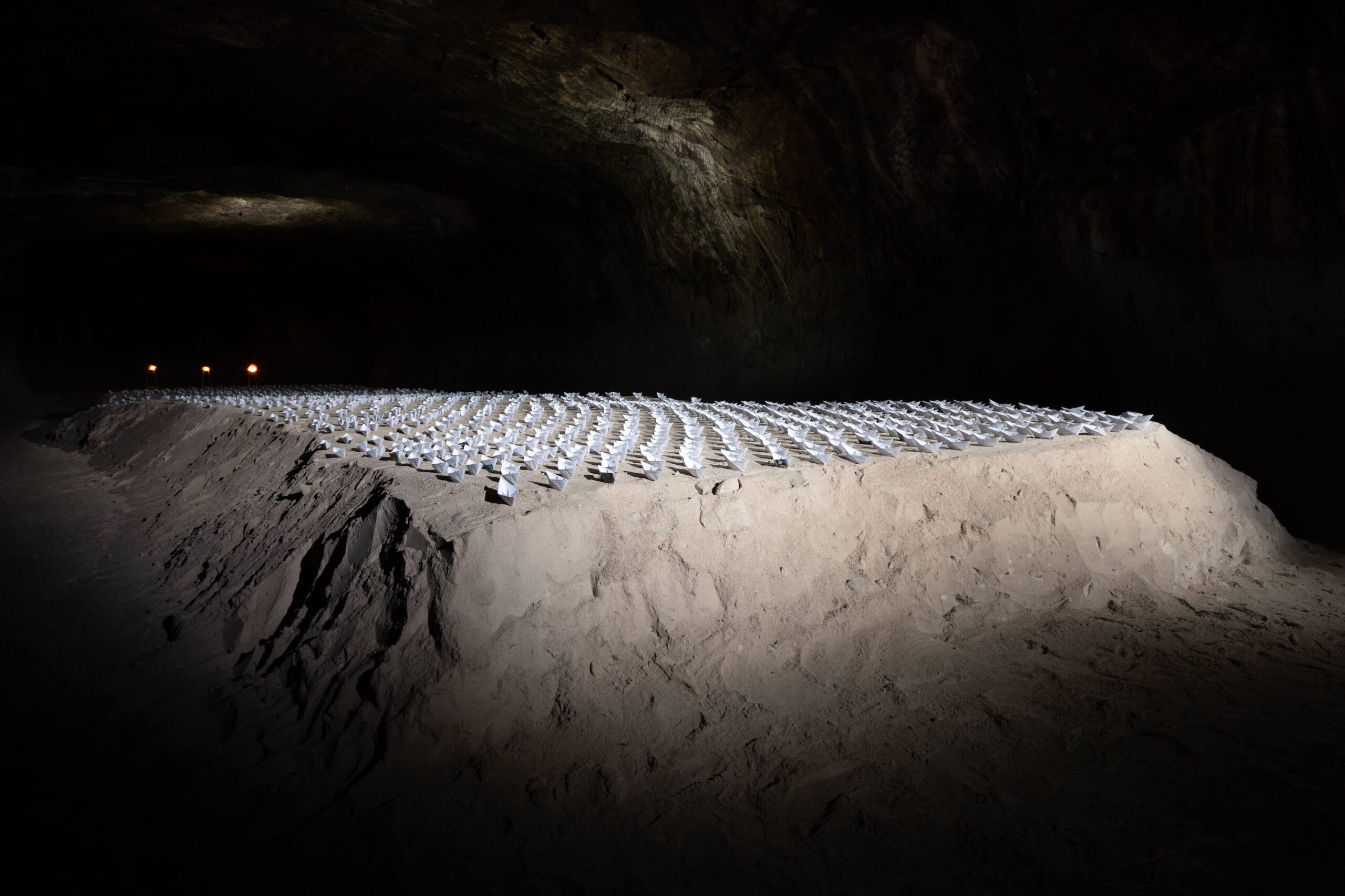
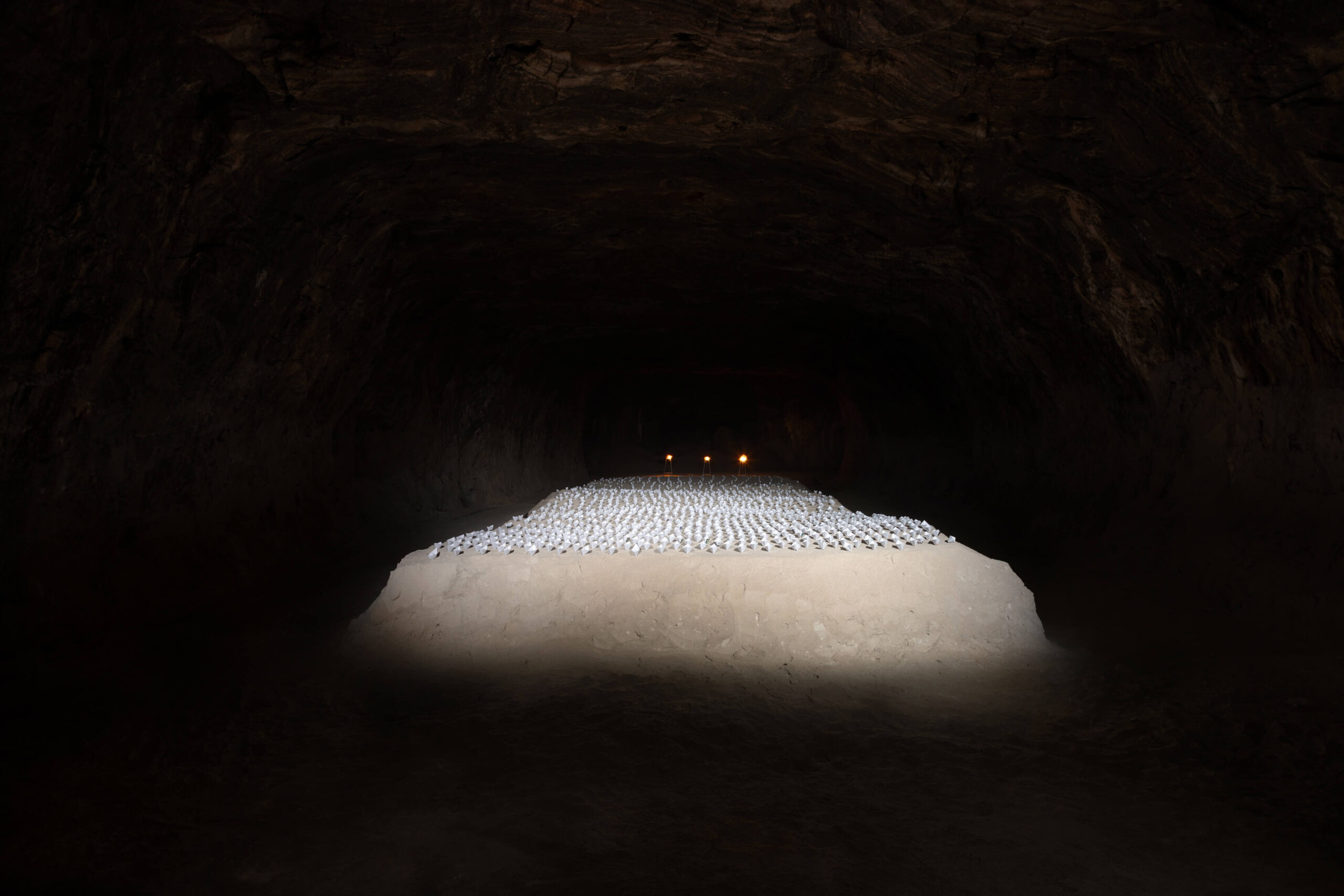
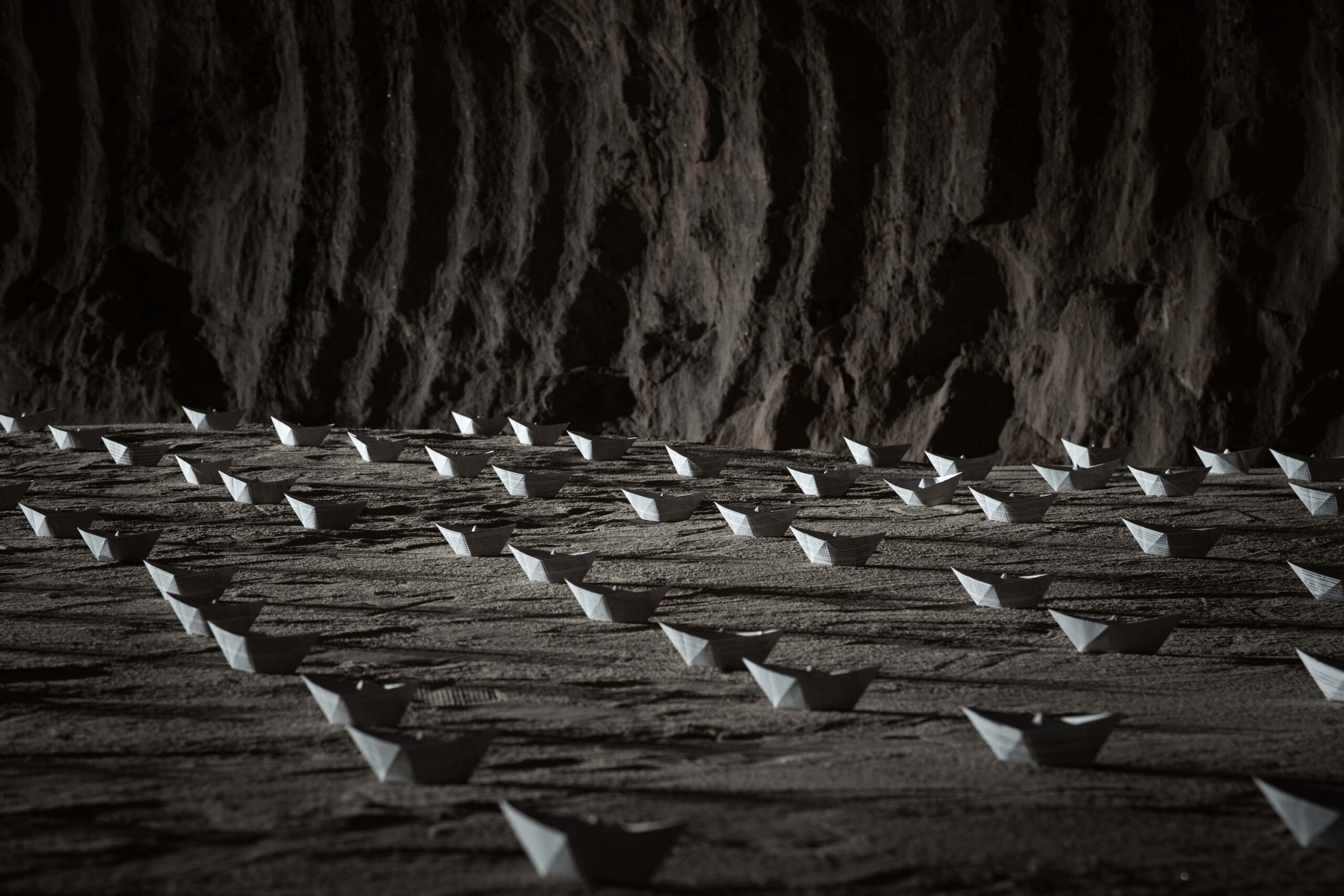
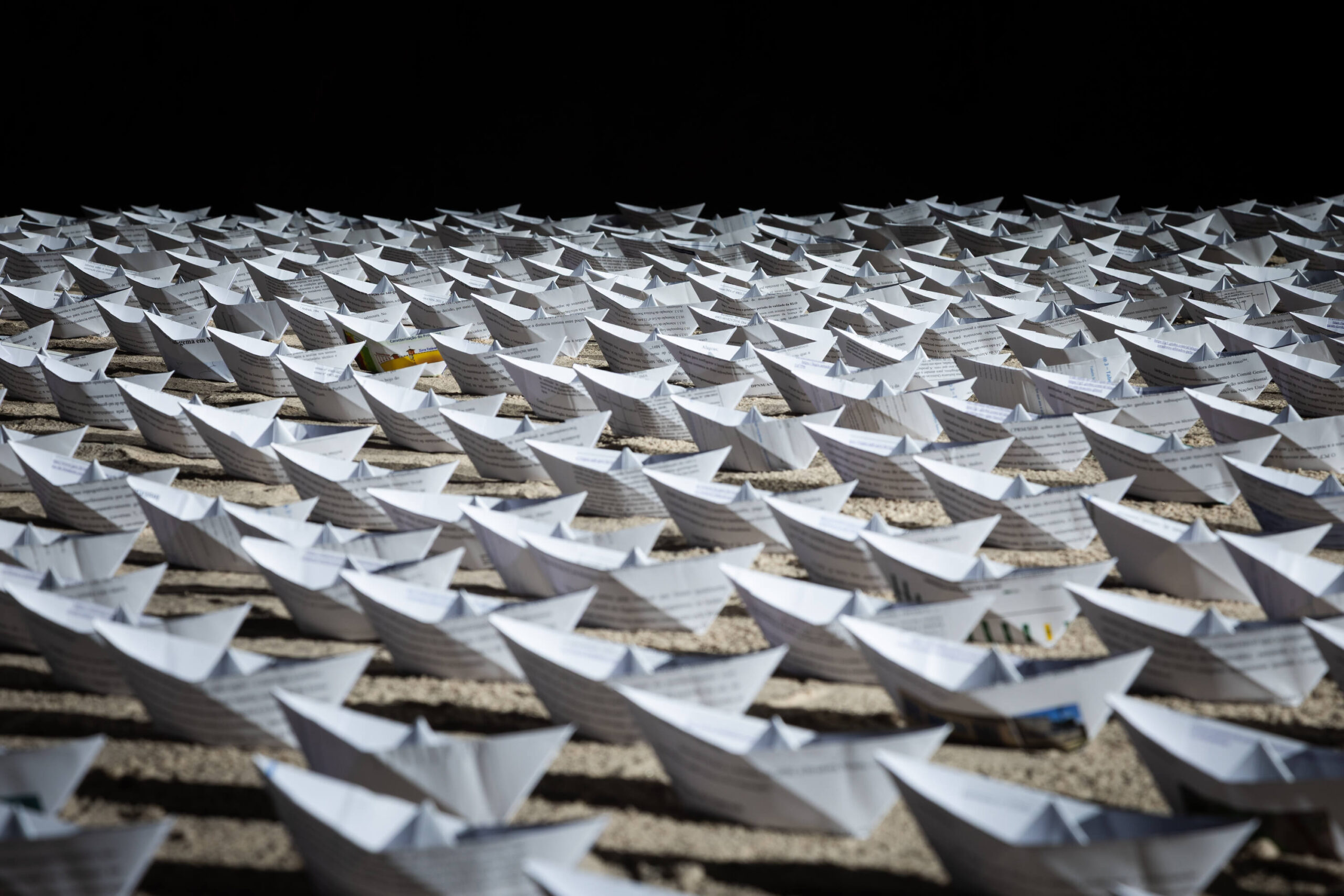
1308 paper boats on a rock salt platform.
37 x 5 x 1 m
On April 17th, the artists Maura Grimaldi, Natália Loyola and Victor Gonçalves join the Alfaia Association and the Verão Azul Festival, with the support of the Portuguese Republic – Culture / Directorate-General for the Arts, for the inauguration of the exhibition SALARIS – Fictions from Salt. The exhibition is an artistic intervention in a Rock Salt mine in Loulé with about 45km of extension.
Each artist will occupy a distinct chamber within this underground complex, creating a path that invites visitors on a journey through different artistic explorations of salt, geology, and human relationships with the natural and technological environment.
“Descending 230 meters into the earth is more than a physical displacement, it’s a shift in scale. The mine is, at the same time, a human gesture and a force that surpasses us. It swallows us, repositions us, helps us remember that we are part of the landscape, not something separate from it,” describes Natália Loyola.
Natália, exploring the field of sound ecologies, develops installations that transform the tactile into sonic experiences. Her work investigates the tenuous relationship between the artificial and the natural, between language, spatiality, and geology, by integrating technological elements to create immersive sound environments that invite reflection on the narratives of the Capitalocene.
For Victor Gonçalves, “this project is, for me, a kind of journey to the center of the earth, in a sense that Jules Verne might not have imagined: not a search for fossils or volcanoes, but a descent into the invisible layers of geological chronology. The salt mine, with its halite walls, becomes a place of total sensory experience. Occupying an active mine is like entering a space where the plasticity of time materializes in strata, and where human action and geology meet in an aggressive and poetic way.”
Victor presents two installations that explore the relationship between time and matter. “Evento Sentinela” (Sentinel Event) is composed of more than 1,300 paper boats, made with the report of the CPI (Parliamentary Inquiry Commission) of Braskem in the Brazilian Senate about the environmental crime in the rock salt mine of Maceió. The boats, arranged on a salt platform with 130 m², transform the official document into a visual experience. “Situação-Salobra” (Brackish Situation) proposes a sound and tactile immersion, where the public is invited to stand before blocks of salt. Both works investigate the fragility between medium and message and the tension between the artificial and the natural.
Maura Grimaldi, in turn, will transform their chamber into an immersive space of images, seeking relationships between the experience of cinema and the underground world of the Mine’s galleries. They also intend to make use of what they call “slow practices” by using analog formats, such as 16mm, and chemical processes in her studio.
“In general, we don’t usually realize how salt is so present in the things we consume and live with, nor do we have the dimension of the colossal structure that is created for its extraction. It is when the most everyday things, which often seem irrelevant and small, gain another value. Being able to experience, up close, the environment of the mine is as sublime as it is astonishing. We become aware of the magnitude of work and equipment capable of, at the same time, providing resources and irreversibly intervening in the landscape,” says Maura.
Each installation takes advantage of the unique characteristics of the rock salt mine, from its natural darkness to its crystalline walls, to create immersive and reflective experiences. This project not only highlights the individual practices of the artists, but also creates a dialogue between their approaches, offering visitors a multifaceted perspective on the complex relationships between humans, technology, and the natural environment in the contemporary context.